
Project:
Creating a solution based design for health care and transportation mobile design for aging population
Role:
UX/ UI designer, UX Researcher, Prototyping
Duration:
April 2024 - May 2024
Health Care & Transportation Mobile Design
Tools:
Microsoft, Teams, Miro, Figma, Mural Collaboration, Zoom, Vimeo Google Meets
Team:
4 Designers

The Problem
"As the aging population continues to grow, many elderly individuals face challenges in independently managing their healthcare needs, including scheduling doctor appointments and securing reliable transportation to attend those appointments. My group aims to address these challenges by creating an application from scratch that simplifies the process, ensuring the elderly can easily access the healthcare services they need."
The Solution
"To solve this problem, my group conducted comprehensive user research to understand the elderly's pain points, including usability testing on existing products such as Kaiser Permanente, Uber, and Google Maps. We synthesized the data using affinity clustering and prioritized issues with bull’s-eye diagramming.
Our design process was methodical and user-centered, involving abstraction laddering, thumbnail sketching, storyboarding, low-fidelity prototypes, schematic diagramming, and usability testing. We then created clickable high-fidelity prototypes to refine the solution. The redesign was validated with users, confirming that their pain points were effectively addressed.
The project was completed within a month, and the final solution provided the elderly with an intuitive and reliable way to manage doctor appointments and transportation needs. Now, let’s dive deeper into each step!"

Discover
Define
Sketch
Test
Decide
Validate

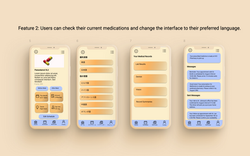


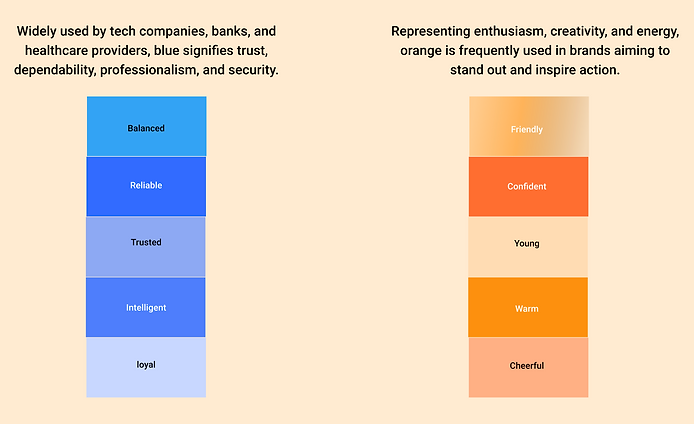
Using the affinity clustering technique, my group and I identified several accessibility considerations, such as color schemes, language settings, and intuitive icons. Additionally, we discovered potential features for the app, identified existing problems, and noted positive aspects that users appreciate in their current applications.

Using the bull's eye diagramming technique, we were able to identify which problem should be prioritized for tackling first. Although all the problems are important, we aimed to solve the issues of navigating the scheduling of appointments and reserving rides for transportation.

Abstraction laddering enables us to create "How might we" statements and identify the root causes of problems.


Usability Testing
After creating low-fidelity prototypes, we asked five users usability testing questions. Following the testing, we created an affinity diagram to organize all the answers we collected.


Next step,
1. I would have to research which communities are the ones elderly people belong to. For example, the communities online and communities offline for specific targetted areas.
2. Considering life stages, everyday practices, and community networks to overcome age-based stereotypes and better address the diverse needs of older individuals. For example, understanding common life stages of people aged 55 -80 and their daily practices and community networks.
3. The next approach is joining those online communities, setting up online groups, participating in cultural events, and also shadowing an interview participant’s daily life to gain a deeper understanding.
These approaches should be done at the beginning of the design sprint/process. In this way, we can create better designs that align with older people in HCI.
Later, the interviews are the crucial and necessary part of the design process to reiterate the design.
I appreciate all the users and my teammates from Iowa State University and the Namibia University of Science and Technology.
Reflection

Please reach out to khinekzaw7@gmail.com for more details of this case study.